How Custom Drapery Gets Measured and Made Right in Fishers
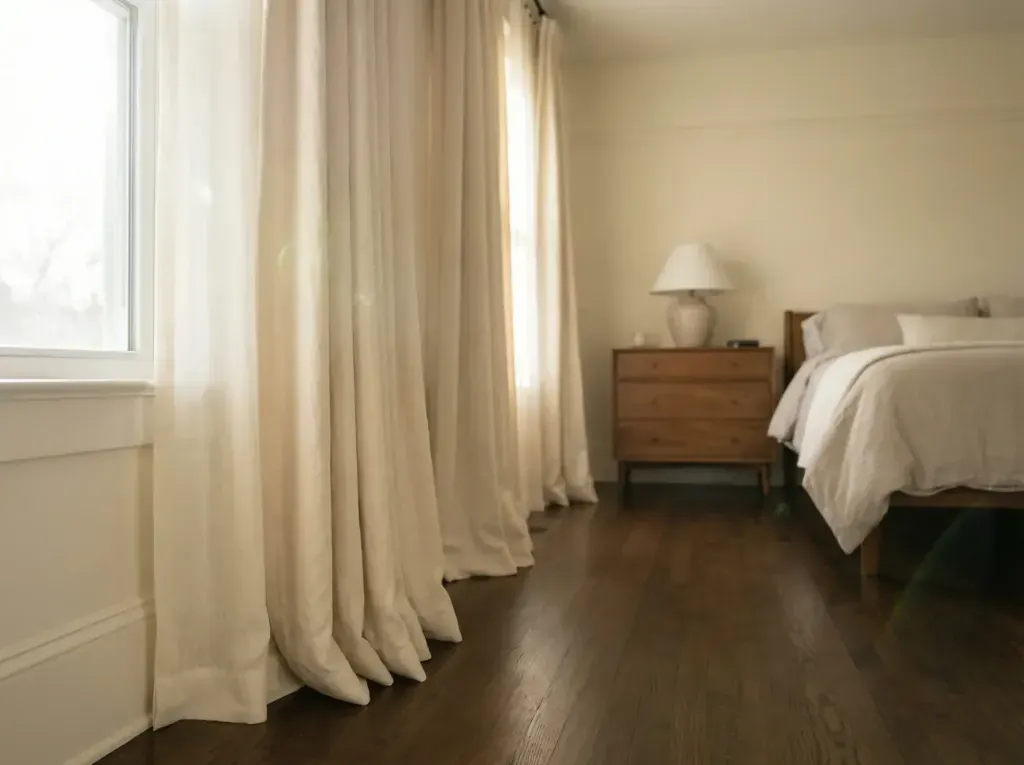
Drapery is the thing that makes a room feel finished, and it is also the easiest window treatment to get wrong by hanging it too low, too narrow or too short. A shade can be adequate. Fabric is either right or it looks like an afterthought, and half the panels we replace in The Hawthorns (with Fairways at The Hawthorns), Springs of Cambridge, Windermere (with Windermere Pointe, Windermere Villas, Crosswinds at Windermere, Woods Edge at Windermere, Windermere Village) were simply hung too low. This is a room by room walk through a Fishers house, with the pleat, the break and the layering call we would make in each space.
Drapery is a made object, not a purchase
Ready made panels come in a few lengths and you hang them. Custom drapery is cut and sewn for one window, which means every decision gets made before a single yard is cut. Get the decisions right and the panels hang like they grew there. Get them wrong and no amount of steaming fixes it. Here is what actually gets decided.
Pleat styles and what each one does
- Pinch pleat, also called French or three finger. The classic. A stiffener called buckram sits in the header, the pleats are hand tacked, and the panel works on rings or on a traverse track. Tailored and formal, and it holds its shape for decades.
- Two finger pleat. Slightly less fabric per pleat and a softer look. Good middle ground in a family room.
- Euro pleat, tacked at the very top rather than partway down. The fabric falls more loosely below the header. Reads contemporary.
- Goblet pleat. Formal, rounded, usually stuffed to hold its shape. Best on stationary panels, since drawing them daily crushes the shape.
- Inverted or box pleat. Flat across the front with the pleat folded behind. Very tailored, almost always stationary.
- Ripplefold. No pleats at all. Snap carriers ride a track at fixed spacing and produce an even S curve. It is the best system for very wide runs and for motorization, and it stacks tighter than a pleated panel. It needs its own track, so it will not hang from a decorative rod with rings.
- Grommet. Casual, no buckram, deep waves. The grommet rides directly on the rod, so the rod diameter has to match. The panel cannot traverse on rings.
Most Fishers houses land on a pinch pleat or on ripplefold, and the choice usually comes down to the hardware you want to look at rather than to the fabric itself.
Lining choices
- Unlined. Soft, light comes through, and the face fabric will fade faster because nothing is between it and the sun.
- Standard lining. A sateen backing that gives the panel body and evens out how the house looks from the street. It also reduces and slows fading of the face fabric.
- Blackout lining. A coated backing that stops light through the cloth. Be honest about what it does not do: light still comes around the panel unless you have generous overlap and proper returns, and needle holes at the tacks can show as pinpoints on a bright window.
- Interlining. A soft flannel layer between the face and the lining. It adds weight, improves how the fabric falls, muffles sound a little, and hides the shadow of the rings. It is the most expensive option and the one designers reach for on formal rooms.
Fullness ratio
Fullness is the ratio of flat fabric width to the width the panel covers. At 2 times fullness, a panel covering 50 inches of rod uses about 100 inches of flat fabric before hems and returns. Most pleated drapery is made at 2 to 2.5 times. Sheers usually want 2.5 or more, because a thin fabric at low fullness looks like a bedsheet.
Going below 2 times saves money and it shows. The waves flatten and the pleats look pinched, and the panel reads cheap even in expensive cloth. Going above 2.5 adds cost and adds stack, and past a point the extra fabric just sits in a pile at the end of the rod. Ripplefold is spelled differently, as a percentage, with 80 or 100 percent being common.
Ranges and timing
Nationally, custom work measured and installed runs roughly $250 to $2,600 a window, and drapery sits toward the upper end of that because of yardage and labor. Hardware is often quoted separately. If you motorize a track, battery drive runs roughly $100 to $300 a window less than hardwired. Expect two to five weeks for fabrication, and expect a good workroom to want the shade installed first.
Every drapery problem we get called about traces back to a measure that skipped something: the projection of the shade underneath, the level of the floor, or the wall space the stack needed. Get those settled and the sewing is the easy part. Fishers Window Treatments measures for drapery after the shade is in, not before. Call (317) 863-9966 to start a Fishers project properly.
Floor break
How the panel meets the floor is the detail people notice without knowing why:
- Float, about half an inch off the floor. Crisp, practical, and the right call for panels you draw every day or a house with pets.
- Kiss, just brushing the floor. Beautiful when the floor is level. Merciless when it is not.
- Break, an inch or two long so the panel buckles softly at the bottom. Forgiving on an uneven floor.
- Puddle, three inches or more. Stationary panels only, and it collects dust.
Measure to the floor at several points along the rod, since floors in older Fishers houses are rarely level across a whole window. Take the finished length from the bottom of the ring eye or the carrier rather than from the rod itself. And remember that fabric relaxes after it hangs, especially linen, which also moves with the humidity, so a kiss length in one season can drag in another.
Hardware and stack back
Stack back is the wall the panels take up when they are fully open. It grows with fullness, with fabric thickness, with lining, and with the pleat style. This is the number people forget, and it is the reason so many drapes cover a third of the glass all day.
Two rules fix it. Mount the rod wider than the opening so the open panels sit on the wall rather than on the glass, and mount it higher than the trim so the window reads taller. On a wall where there is not enough room on both sides, a one way draw that stacks entirely to the open side is the right answer.
The other hardware details matter more than they sound. The return is the short piece of panel that wraps back to the wall at the end of the rod, and without it you get a light line down the outside edge. The overlap is where two panels cross in the middle so they close without a gap. Lined drapery is heavy, so brackets go into framing or into proper anchors, and long rods get a center support.
Layering over an existing shade
Most drapery in Fishers houses goes over a shade rather than alone on the window. The rule is clearance. Measure the projection of the shade, including the cassette or fascia and the hembar, and then pick a bracket with enough projection that the panel never touches it. A standard bracket often will not clear a deep fascia.
Order in the right sequence, too. Install the shade first, then measure for drapery against what is actually on the wall. If the shade is motorized, make sure the stacked panel does not block the battery wand or the charging port, because you will be getting at that about once a year.
Frequently Asked Questions
Does blackout lining make a room completely dark?
Not on its own. Blackout lining stops light through the cloth, but light still comes around the panel at the sides and over the top unless you have generous overlap in the middle and returns that carry the fabric back to the wall. Needle holes at the tacks can also show as small points of light on a bright window. The dependable arrangement is a blackout-lined panel closed over a room darkening or blackout shade, which covers the edges.
What is interlining and is it worth paying for?
Interlining is a soft flannel layer sewn between the face fabric and the lining. It adds weight so the panel falls in deeper, more even folds. It also softens sound in a hard room and hides the shadow of the rings. It is the most expensive lining choice and it is also the one that makes an ordinary fabric look expensive. In a formal dining room or a bedroom, it earns its cost. In a casual den, standard lining is plenty.
Why does a patterned fabric cost so much more?
Because of the repeat. Every panel has to be cut so the pattern lands in the same place, which means fabric between usable cuts becomes waste. The larger the repeat, the more yardage you buy without hanging it. On tall windows a big repeat can add a noticeable amount of fabric to the order. Ask what the repeat measures before choosing, and ask whether the fabric can be railroaded, meaning turned sideways to avoid seams on a wide treatment.
How do I clean custom drapery?
Vacuum with a brush attachment on low suction a few times a year and most panels stay fine for a long time. When they need more, use dry cleaning or an in-place cleaning service. Never put a lined panel in a home washing machine, since the face fabric and the lining shrink at different rates and the panel will never hang correctly again. If a panel gets rumpled, a steamer used from the back will usually settle the folds.
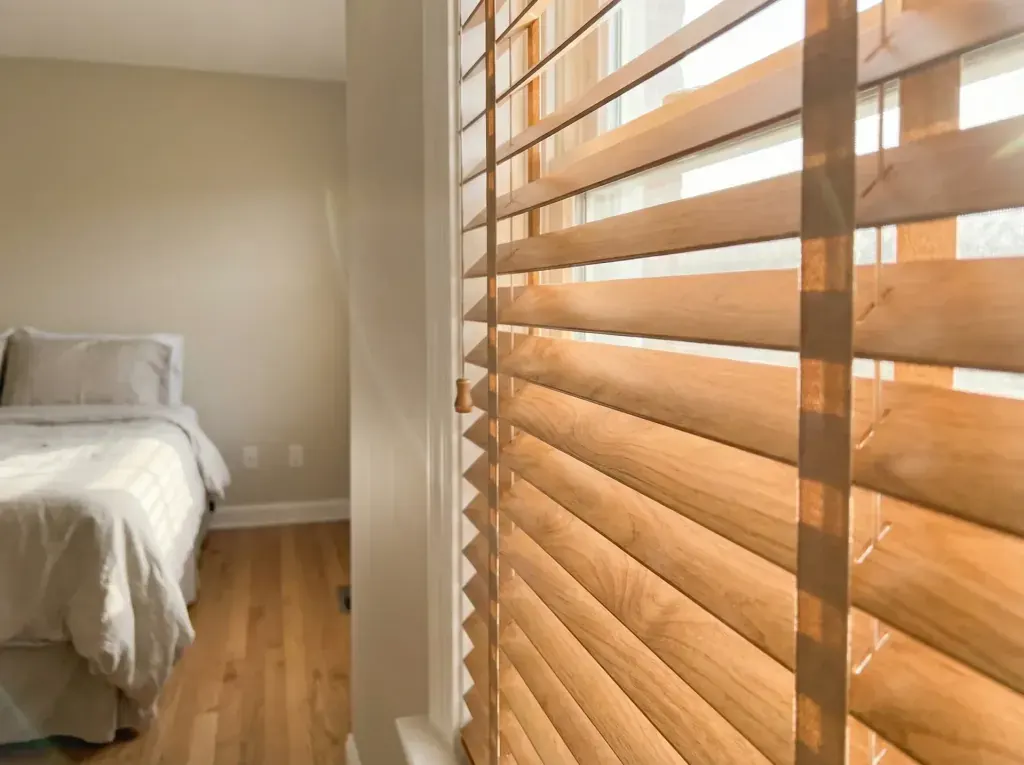 Wood Blind Pricing in Fishers: Stock Versus Custom Cost
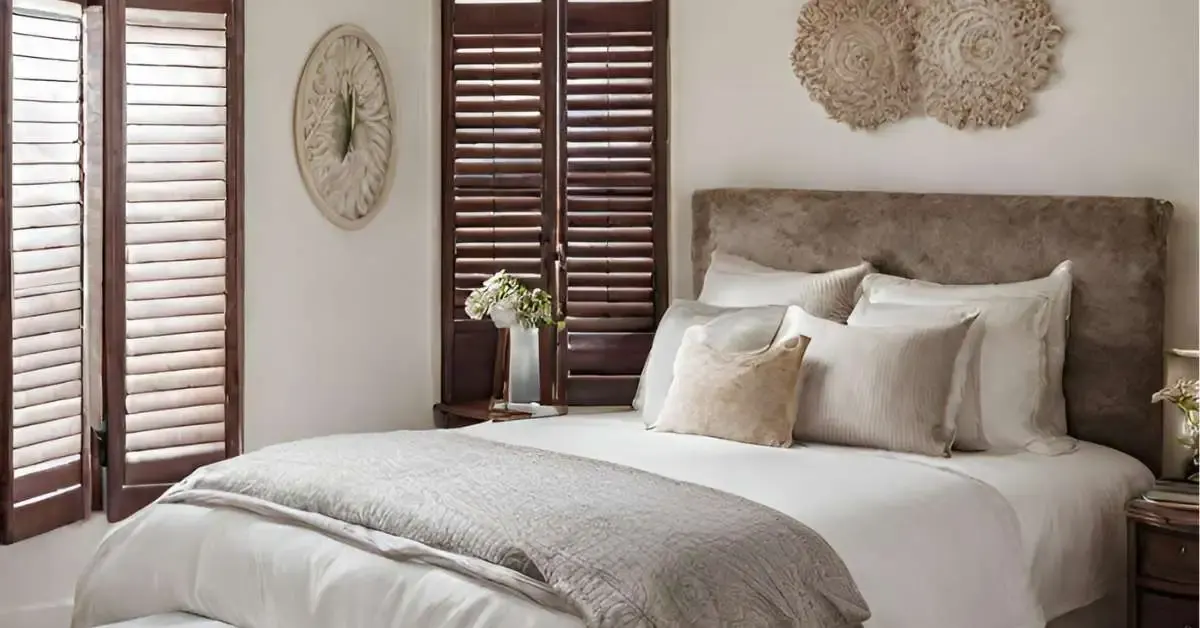 Plantation Shutters in Fishers: Measuring and Spec Guide
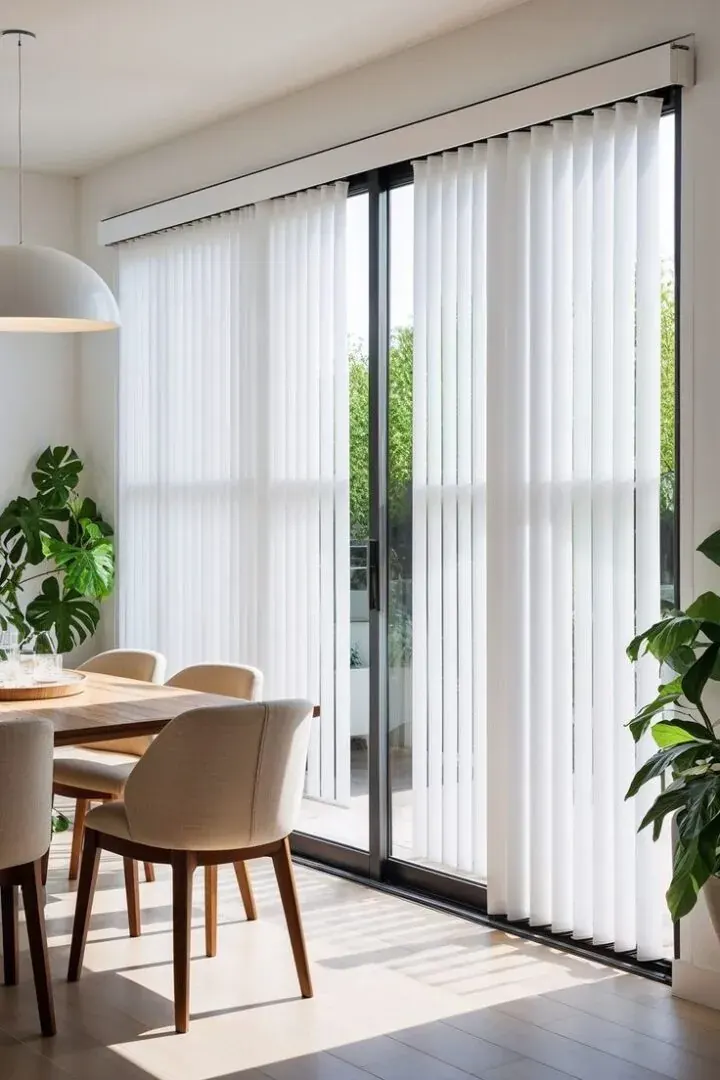 What a Finished Fishers Blind Install Should Look Like