Room by Room Comfort Through an Indiana Winter in Fishers

Cellular shades get talked about as an insulating upgrade more than any other window treatment, and the reason comes down to how the fabric itself is built.
Why Older Windows Feel Colder Than the Thermostat Says
Most people assume a cold spot near a window means air is leaking in somewhere, and sometimes that's true. But plenty of Fishers homeowners have a tight, well-sealed window that still feels cold to sit near, and the reason is simpler than a leak: the glass surface itself is cold, and a body loses heat to a cold surface by radiating toward it, regardless of whether the air around it is moving.
Add to that a convective loop. Air against the glass cools and sinks, then spreads out along the floor in front of the window, which reads as a draft even when the frame is sound. Single-pane and early double-pane windows, both still common across older Fishers housing stock, have a lower insulating value than current glass, so this effect is stronger on them. None of it shows up on a thermostat, which only measures air temperature at one point in the room.
Mount Style and Fit Change How Much Draft Gets Through
Picture a bay window or a sliding glass door, common trouble spots for cold rooms, and it's easy to see why fit matters so much. An inside-mounted shade on a bay window leaves small gaps at each angle where the panes meet, and that's exactly where the cold air rolling off the glass finds its way past the shade and into the room.
Mounting the shade outside the frame instead, so it overlaps the wall or trim on all sides, closes off more of that path. It's a better fit for a drafty corner window or an old sliding door track that was never great at sealing to begin with. Side channels are worth asking about on these problem spots too. They run down the edges and close the last bit of gap a plain outside mount leaves open.
How Cellular Shades Trap Air Instead of Just Blocking Light
A cellular shade isn't magic, and nobody should be sold on one like it is. It's pleated fabric folded into small hexagonal pockets that trap still air, and still air is a lousy heat conductor, so the shade slows the rate at which the room's warmth gets pulled toward the cold glass. That's the entire mechanism. No special coating, no hidden technology.
Cells run from about 3/8 inch to a full inch depending on the line, single-row or double-row. Manufacturers publish R-values for the fabric itself, typically R-1.5 to R-2 for single-cell and R-3 to R-3.5 for double-cell. Those numbers describe a few inches of shade, not the whole window assembly, and nobody should expect them to rewrite a heating bill on their own.
Layering Shades and Drapery for the Coldest Rooms
Layering costs more than a single treatment, plainly, since it means buying both a shade and drapery for the same window. Stock drapery panels sit at the low end of the national price range, roughly $50 to $150 apiece, while custom lined panels with hardware climb well past that depending on width and fabric. It's rarely worth doing across a whole house on a tight budget.
Where it earns its cost is the specific rooms that are actually uncomfortable: a living room with a big west or north exposure, a primary bedroom that runs cold, a sunroom used year-round. Spending the layered budget there and leaving secondary rooms with a single shade is a reasonable way to split a limited budget across a Fishers house.
What Window Treatments Can and Can't Fix
Here's the honest version. Cellular shades and layered drapery reduce the radiant chill and the convective draft coming off cold glass, and people notice the difference sitting near a window in the evening. What they don't do is seal an actual air leak where a frame has failed, weatherstripping has worn out, or a window doesn't close tight anymore. That's a separate project, and no fabric treatment substitutes for it.
The two problems usually show up together in an older Fishers house, which is why the combination works: address the worst of the actual leaks where it makes sense to, and let the shade or drapery handle the radiant and convective chill that would still be there even on a perfectly sealed window. Treating it as an either/or question usually leads to disappointment either way.
Working out a per-room budget gets easier once real measurements and options are in front of you, and a free in-home measure is the point where estimates turn into actual numbers.
Frequently Asked Questions
Do I need to replace my windows if a room feels cold?
Not necessarily. A lot of the chill people feel near a window is radiant heat loss and a convective draft off cold glass, both of which happen even on a window with a good seal. Cellular shades and layered drapery address that directly. Replacement matters more when there's an actual failed seal or damaged frame.
Is layering a shade and drapery worth the extra cost?
For the one or two rooms in a house that are genuinely the coldest, usually yes. For the rest of the house, a single well-fitted cellular shade often does enough. It comes down to which rooms people actually notice being uncomfortable in, not treating every window the same way.
How do I know if my window has an actual air leak versus just cold glass?
Hold your hand right at the frame on a cold, windy day. Moving air you can feel means an actual leak somewhere in the seal. A window that feels fine at the frame but still makes the room cold a foot or two away is more likely radiant chill from the glass itself, which is what shades are built to address.
 Window Treatments in Fishers: A Complete Buyer's Guide
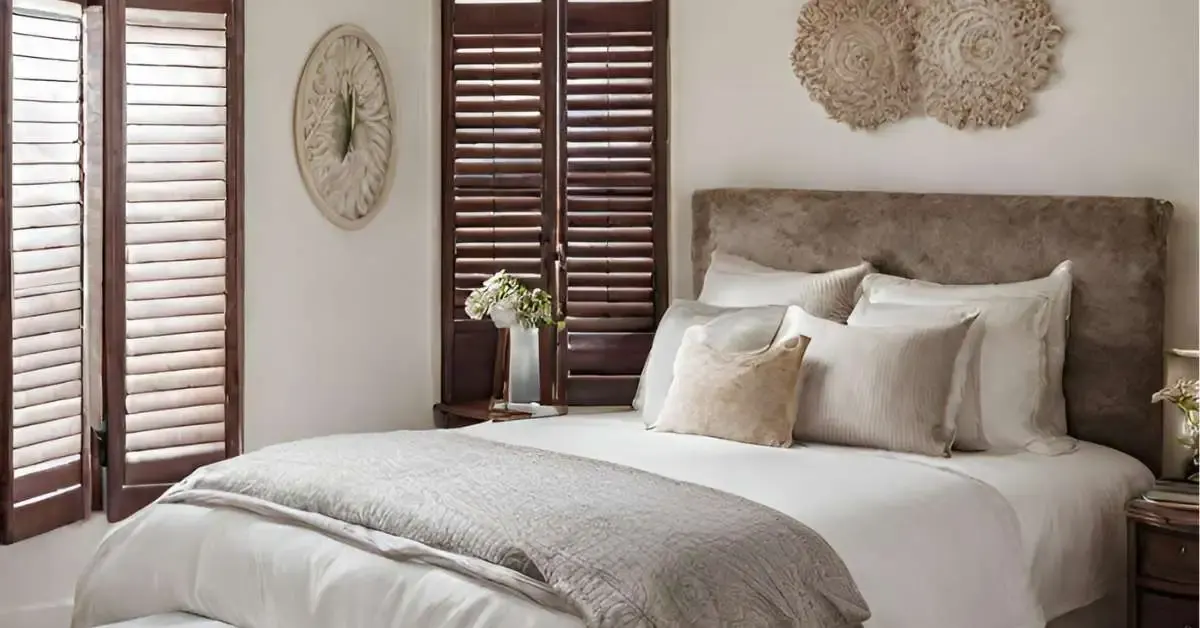 Common Plantation Shutter Mistakes Fishers Homeowners Should Skip
 Motorized or Manual: Choosing Shades for a Bay or Bow Window