What Cellular Shades Cost in Fishers and What You Get
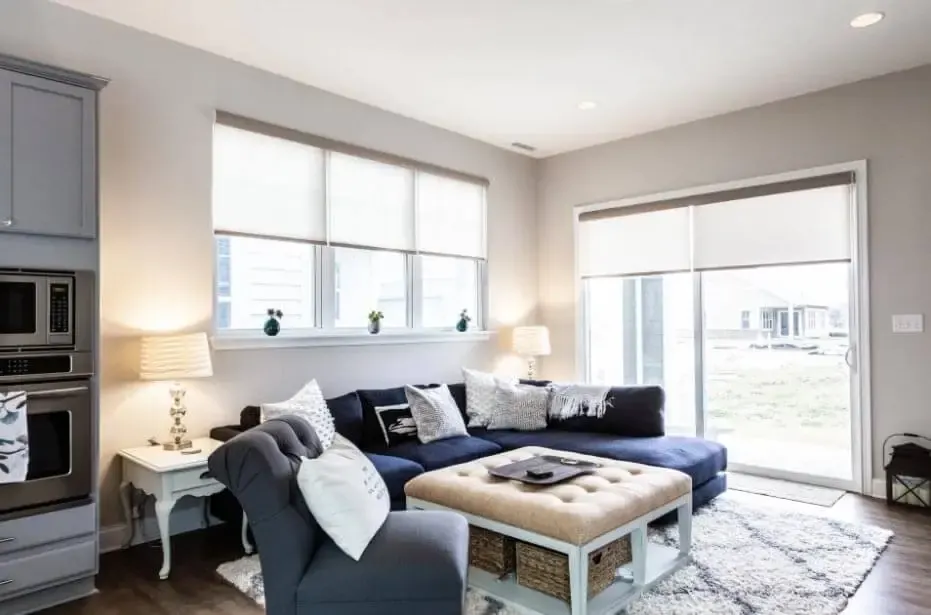
Most cellular shade disappointment in Fishers traces back to an assumption nobody checked, that room darkening fabric alone makes a room dark, that double cell is worth it on every window, that a fast delivery date is automatically good news, or that a low quote is the same shade as a higher one. Here are the mistakes that show up most often, and what to ask instead.
What the Cells Actually Do
A common mistake in Fishers is assuming any cellular shade does roughly the same job at the glass, so the choice comes down to color alone. It does not work that way. A cellular shade is pleated fabric folded into rows of hollow tubes, and the trapped air inside those tubes is what slows heat moving through the window. How much of that structure a shade has, single cell or double, actually changes performance.
Another mistake is expecting a number that predicts your utility bill. Manufacturers publish an R-value for cellular shades, similar to the number used for wall insulation, and it is real information, but it describes the product under test conditions, not your specific Fishers house with its own windows and its own orientation to the sun.
The last mistake is assuming the shade stops heat entirely rather than slowing it. Glass stays the weak point in the wall either way. The cell structure just makes the exchange happen more slowly.
How the Shade Operates
Cordless operation is standard on most stock cellular lines now rather than a paid upgrade, so a quote that lists it as an extra charge is worth a second look. A spring inside the headrail holds the fabric at whatever height you leave it, and it needs no ongoing cost once installed.
Top down bottom up is a real upcharge, since it adds a second moving rail and a second cord path inside the headrail along with more assembly time. It earns that cost on a street facing bedroom or a dining room that looks at a neighbor, where dropping the top rail gives daylight without giving up privacy at eye level.
Motorization is where budgets get away from people. Battery powered motors run roughly $100 to $300 a window less than hardwired based on national figures, which makes battery the obvious first choice, until you count the batteries. A wand commonly needs replacing something like once a year under normal use, a small task on a few windows and a real yearly chore on a house full of them in a Fishers home.
Opacity and the Light Gap
Decide light filtering or room darkening for each room, and if darkness matters, ask a second question: what handles the light gap at the edges of an inside mount. Room darkening fabric alone will not fully darken a room, since the light that wakes people up comes around the shade rather than through it.
Get the real fix, side channels or an outside mount with real overlap, written into the order for any room where genuine darkness matters, and treat a drapery layer as the softer alternative to either one. Confirm the price for that fix is included in the quote rather than assumed.
For everywhere else in the Fishers house, confirm light filtering is the plan, since it handles daytime privacy and glare without the added cost of an opacity upgrade you do not need.
Single Cell or Double Cell
A single cell shade has one row of tubes. A double cell has two rows front to back, which puts two air pockets in series between the room and the glass instead of one. Double cell slows heat movement more. It also costs more and sits thicker front to back, and once raised it stacks taller at the top of the window.
Cell size is a separate spec from cell count. Common sizes run 3/8 inch, 1/2 inch, 9/16 inch, and 3/4 inch. Smaller cells look finer and stack tighter, which suits a small opening. Larger cells cover a tall window with fewer pleats. A 3/4 inch cell on a short window can look coarse, and a 3/8 inch cell on a tall stairwell window can look like corduroy.
Double cell earns its price on the openings that actually work hard: a west facing wall taking afternoon sun, a bonus room over a garage, a corner of a Fishers house that never quite feels comfortable, or a run of glass wide enough to matter. On an interior hallway window or a small bath, single cell does the same visual job for less money.
What Cellular Shades Cost
Stock cellular shades run roughly $60 to $600 a window nationally, and custom shades measured and installed run roughly $250 to $2,600 a window based on national pricing. Spending the top of that range everywhere in a Fishers house is rarely the right call, since most rooms are not asking for the same thing.
Put the money where a room genuinely demands it. Double cell and side channels belong in a bedroom that needs darkness and heat control together. Top down bottom up belongs in a room the street can see into. A plain single cell light filtering shade is enough for a guest room or a hallway nobody spends real time in.
That kind of room by room spending is how most houses around Fishers and IN communities end up looking finished without every window getting the same expensive treatment. A simple shade in a low traffic room is not a compromise. It is just the right amount of shade for that room.
Go room by room and the choices get easy: darkness where people sleep, daylight where you want it, double cell on the walls that cook, and something simple everywhere else. Fishers Window Treatments walks the house with you and notes what each Fishers opening actually needs, then puts the plan in writing. Call (317) 863-9966 and we will start with the room that bothers you most.
Frequently Asked Questions
What is top down bottom up actually good for?
It gives you a movable band of coverage instead of a shade that only comes up from the bottom. The everyday use is dropping the top rail a foot or two so daylight comes in above eye level while the lower part of the window stays covered. Street facing bedrooms are the classic case, along with bathrooms, home offices with a low window, and any dining room that looks straight at a neighbor. The trade offs are real: added cost, a visible middle rail, more hardware that can go wrong, and the fact that the shade never fully clears the opening.
Can a cellular shade give me a truly dark bedroom?
Only with help. Room darkening fabric has an opaque liner built inside the cell, so almost nothing passes through the face of the shade. The light that wakes you up comes around the edges instead. To get a genuinely dark room, you need side channels that the shade edges run inside, or an outside mount with two to three inches of overlap per side. A drapery panel layered over the shade is the softer version of the same fix. A room darkening shade on a plain inside mount won't get you there on its own.
What does motorizing cellular shades really cost me?
Two things, and the second one gets skipped. Battery powered motors run roughly $100 to $300 a window less than hardwired, based on national pricing, which is why most jobs go battery. The part that gets left out is that batteries are a consumable, and a wand commonly needs fresh ones something like once a year under normal use. On a few shades that's nothing. On a house full of them it's an annual chore, and it's worse on a window that needs a ladder. Ask before you order.
 Window Treatments in Fishers: A Complete Buyer's Guide
 Common Plantation Shutter Mistakes Fishers Homeowners Should Skip
 Motorized or Manual: Choosing Shades for a Bay or Bow Window