Why Wood Blinds Fail in Bathrooms and Kitchens (and What Doesn't)
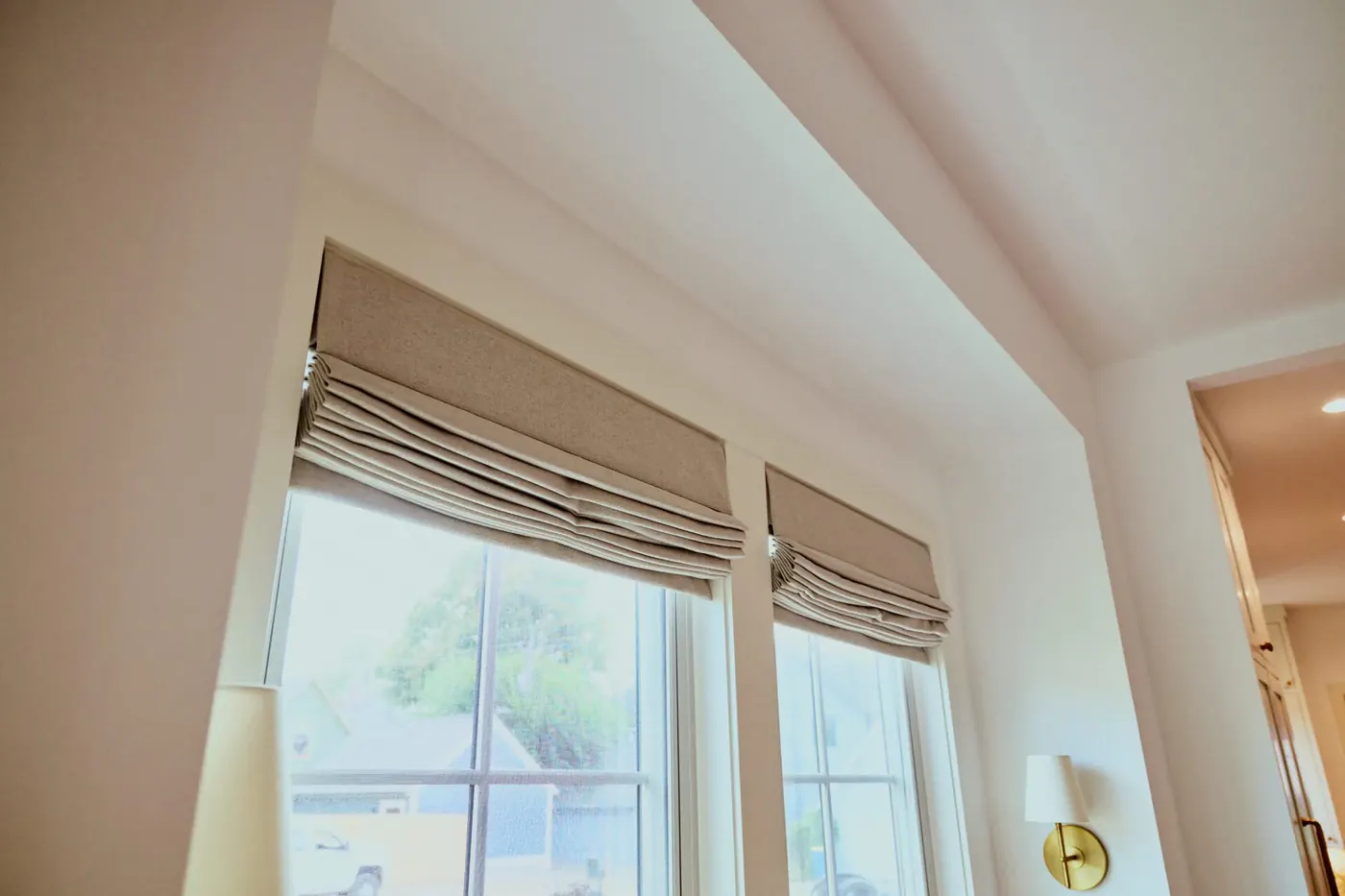
The window over a kitchen sink gets used differently than any other window in the house, opened and closed, looked through, and splashed near constantly, which changes what actually holds up there.
How Humidity Changes What You Should Hang
Not every material reacts to humidity the same way, and understanding why helps explain the recommendations instead of just following them blindly. Wood is a natural, porous material, so it absorbs and releases moisture as humidity swings, expanding and contracting with every cycle until the finish cracks or the slat itself warps out of true.
Faux wood is a PVC or composite core, which is effectively waterproof at the material level. It doesn't absorb anything, so a humidity swing that would eventually damage real wood does nothing to a faux wood slat beyond maybe a slightly cooler surface temperature. That's the entire explanation behind why faux wood dominates bathroom recommendations in Fishers and everywhere else, it's chemistry, not marketing.
The Trouble With Windows Over a Sink or Tub
A window positioned directly over a tub or a kitchen sink creates a reach problem before it creates a style problem. Standing in a tub to adjust a shade isn't something anyone wants to do regularly, and leaning across a full sink to reach a cord or wand gets old fast. This is where a lot of Fishers homeowners end up looking at motorized or at least a very low-maintenance manual option.
The window itself is often a different shape than a standard living room window too, sometimes a slider or an awning-style unit that cranks open, sometimes narrow and tall next to a tub surround. Inside mount depth gets tight on these, since the crank hardware or the window's own frame can eat into the space a headrail needs, so a proper measure matters more here than almost anywhere else in the house.
None of this means every bathroom or kitchen window needs a complicated mount. Plenty of standard windows in these rooms take a normal inside mount without any fuss at all. It's specifically the crank-out or awning-style windows clustered around a tub or sink that call for extra care at the measure, along with anything unusually narrow.
Getting Privacy Without Losing the Light
A kitchen sink window often faces a side yard or a neighbor's driveway, and most people don't want to stand at the sink doing dishes feeling like they're on display. A light-filtering shade left down during the day still lets in enough light to work by, while cutting the direct sightline in from outside.
Full privacy at night is a separate setting, and this is where a shade with an actual room-darkening or blackout-lined option matters, since a light-filtering fabric alone still shows movement and shape once the kitchen light is on and it's dark outside.
Hardware That Doesn't Rust or Swell
Whatever privacy solution gets chosen, the hardware holding it in place needs to survive the same steam exposure the fabric does. A top-down bottom-up mechanism has more moving parts than a basic roller, which means more metal components exposed to humidity over time.
Stainless steel components and sealed housings handle that exposure without seizing up or rusting, which matters more on a mechanism with moving parts than it does on a simple bracket. Confirming this at the time of ordering saves a Fishers homeowner from a shade that looks great for a year and then starts sticking.
Even a well-chosen mechanism benefits from an occasional check, especially in the first year. A quick look to confirm nothing's binding or sticking catches a developing problem while it's still a five-minute adjustment instead of a full hardware replacement down the road.
Material is easier to judge in person than from a swatch card. A free in-home measure from Fishers Window Treatments lets you see and feel the actual faux wood and fabric options against your own bathroom or kitchen light before committing to anything.
Keeping Grease and Steam From Ruining a Shade
In a kitchen, the failure mode is different but just as predictable. A fabric shade near the stove gradually picks up a film that regular dusting doesn't remove, and after enough time, the buildup changes the fabric's color and texture in a way that no amount of cleaning reverses. It's a slow failure, but it is one.
Wood blinds in a kitchen tend to survive the grease better than the humidity, since a kitchen usually runs less humid than a bathroom, but they're not immune either. A wood blind hung directly above a stove without a range hood pulling steam and grease away will show the same finish problems a bathroom blind shows, just on a longer timeline.
Frequently Asked Questions
How do I get privacy on a bathroom window without making the room dark?
A top-down bottom-up shade is the most common answer, since it blocks the sightline at eye level while leaving the top of the window open for light to come in. Frosted window film is the other main option, letting light through as a diffused glow across the entire window rather than just the bottom portion. Which one is better depends on whether you ever want to open the window up for a full view, since film is permanent and a shade isn't.
Do I need a special shade for a window right over a bathtub?
Not a special product exactly, but the material and mount matter more there than on an easier-to-reach window. Vinyl-faced or faux wood material handles the splash and steam exposure best, and the mount needs enough depth to clear any window crank or trim without the shade rubbing against it every time it moves. This is one of the windows worth having measured in person rather than estimating from a tape measure alone.
Why does the hardware matter as much as the shade material?
Because the hardware is usually the first thing to fail, not the fabric or slats. Bare steel brackets and clips corrode in a humid room well before a good faux wood or vinyl shade shows any wear, and once a bracket starts to rust, it can stain the wall behind it and eventually weaken enough to need replacing. Stainless or coated hardware costs a little more but generally outlasts the shade it's holding.
 Window Treatments in Fishers: A Complete Buyer's Guide
 Common Plantation Shutter Mistakes Fishers Homeowners Should Skip
 Motorized or Manual: Choosing Shades for a Bay or Bow Window